

How to get into photography and start taking stunning photos doesn’t have to be complicated. Photography isn’t just a hobby, it’s a creative skill you can learn with practice and patience. In this guide, we’ll show beginners step-by-step tips, essential gear, easy techniques, and budget-friendly camera/lens suggestions to kickstart your photography journey and capture professional-looking shots.
How To Get into Photography (Step-By-Step Guide)
Before you pick up a camera, it’s important to understand the basic steps to start photography. Let’s break it down clearly for beginners.
1. Know Photography Is Right for You
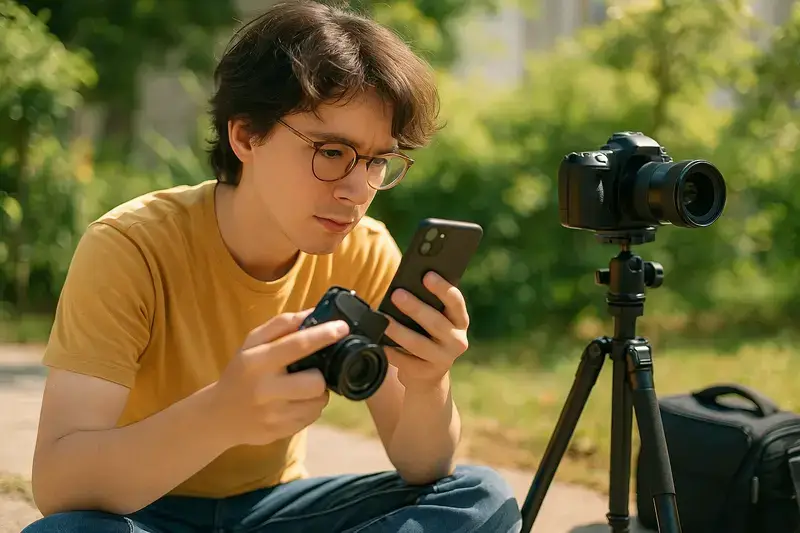
Follow these steps to get started:
- Define Your Goal: Are you doing photography just as a hobby, or do you want it as a career? Knowing your goal helps you to choose the right style and gear.
- Start with Your Available Setup: Begin with whatever device you have (smartphone or camera). Take photos on your own and learn about light, composition, and focus.
- Practice Regularly: Shoot daily or weekly. Try different lighting, angles, and subjects.
2. Beginner Photography Gear You Need to Start
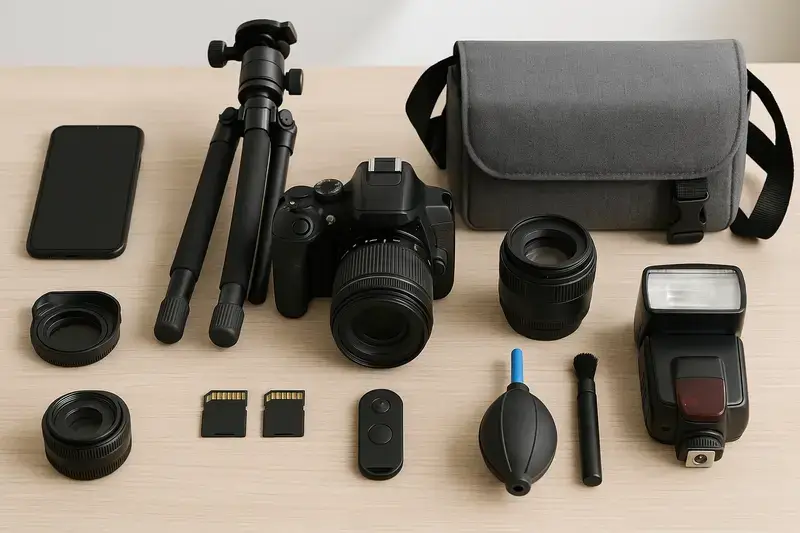
You don’t need an expensive camera to begin. Here’s some basic gear for beginners:
Camera
- Mobile phone (iPhone, Samsung, Google Pixel) – good for practice
- Entry-level DSLR / Mirrorless (Canon EOS 1500D, Nikon D3500, Sony Alpha A6000)
Essential Gear
- Tripod: For stability, especially in low light
- Remote Shutter Release: To prevent blur
- External Flash: Better lighting than built-in flash
- SD Cards: Use multiple small cards for safety
- Cleaning Kit: Keep lenses and camera dust-free
- Prime Lens: Helps learn composition using a fixed lens
- Camera Bag: Carry your gear safely
Budget-Friendly Camera/Lens Suggestions
- Canon EF 50mm f/1.8 (prime lens)
- Nikon 35mm f/1.8
- Sony 16-50mm kit lens
3. Essential Photography Tips for Beginners

Important tips for beginners:
- Rule of Thirds: Place the subject along imaginary grid lines, not in the center.
- Leading Lines: Use roads, rivers, or rails to guide the viewer’s eye.
- Framing: Use natural frames like windows or trees around your subject.
- Layering: Include foreground, middle, and background to add depth.
- Negative Space: Keep the area around the subject clean for better focus.
4. How to Improve Your Photography Skills Quickly

To get better at photography:
- Practice Regularly: Shoot daily or weekly. Experiment with different lighting, subjects, and styles.
- Critique Your Work: Review your photos. Identify what worked and what needs improvement.
- Take Photo Challenges or Projects: Join a 30-day photo challenge. Take themed photos (landscape, portrait, street photography).
- Share Your Work Online: Post on Instagram, Pinterest, or photography groups on Facebook. Get feedback and inspiration from other photographers.
- Learn Editing: Free apps like Snapseed, VSCO, Lightroom Mobile. For professional software use Adobe Lightroom, Photoshop.
Practice + Editing + Feedback = Faster Skill Growth
5. Photography Guide for Beginners: Tips & Tricks
- Start small; don’t rush into expensive gear.
- Focus on practice and learning lighting first.
- Use one lens at a time to master composition.
- Experiment with different styles to find your preference.
- Learn consistently from online tutorials, blogs, and YouTube.
6. Best Budget Cameras and Lenses for Beginner Photographers
Cameras
| Camera | Price Range | Why Choose |
| Canon EOS 1500D | $400-450 | Entry-level, easy to use |
| Nikon D3500 | $400-500 | Great for beginners |
| Sony Alpha A6000 | $500 | Compact and versatile |
Lenses
- Canon EF 50mm f/1.8 (prime, sharp, affordable)
- Nikon 35mm f/1.8 (prime, beginner-friendly)
- Sony 16-50mm kit lens (all-rounder)
Summary
To start photography, practice regularly, learn the basics, begin with small gear, and gradually improve. Regular shooting + editing + feedback is the fastest way to become skilled. For professional editing, you can use Clipping World to make your photos polished and ready to impress.
Photography FAQs for Beginners
The highest-paying photography niches include wedding photography, commercial/product photography, fashion, luxury travel, real estate, and food photography. Among them, commercial and fashion photography tend to pay the most because brands and companies invest heavily in professional images for marketing.
As a beginner, price your services based on your skill level, equipment, and market rates. Start with affordable packages like $50–$150 per session, gradually increasing as you gain experience. Research local photographers’ rates, include editing time, and clearly communicate your deliverables.
The 3/4 rule (also called the “three-quarters rule”) suggests placing the main subject so it occupies about three-quarters of the frame. This creates a balanced and visually appealing composition while leaving space for context or background elements.
The golden rule of photography is the “Rule of Thirds”, which advises placing the subject along imaginary gridlines dividing the frame into thirds. This creates more dynamic, balanced, and natural-looking photos compared to centering the subject.
You can start photography with no experience by following these steps:
1. Start with what you have – smartphone or entry-level camera.
2. Learn the basics – lighting, composition, and camera settings.
3. Practice daily – shoot different subjects and experiment.
4. Edit your photos – use free apps like Snapseed or Lightroom Mobile.
5. Share your work – Instagram, Pinterest, or personal blog to get feedback.